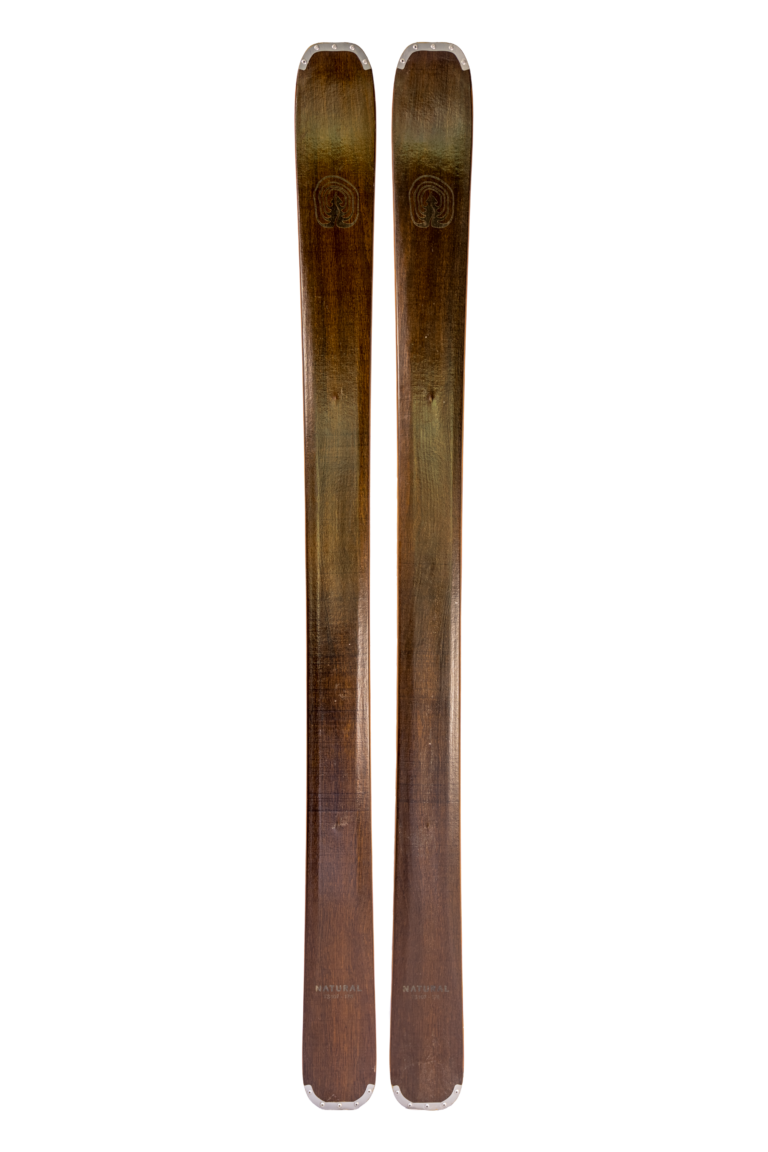


Symbiotic 100
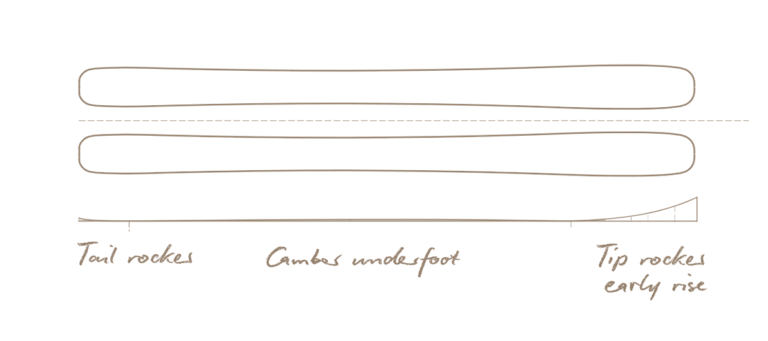
Shape
Specifications
Length: 1640mm
Tip: 132mm
Underfoot: 100mm
Tail: 118mm
Radius: 16m
Weight, 1420grams
Length: 1740mm
Tip: 132mm
Underfoot: 100mm
Tail: 118mm
Radius: 17m
Weight; 1490 grams
Length: 1840mm
Tip: 132mm
Underfoot: 100mm
Tail: 118mm
Radius: 18m
Weight; 1560 grams
Construction
Paulownia core (Spain)
At the heart of the Symbiotic 100 is a paulownia core — among the lightest structural hardwoods available, grown on managed plantations in Spain. It’s the foundation everything else in this ski is built around: take the weight out here, and you can afford a slightly wider, more capable shape elsewhere without the climb suffering for it.
Strandwoven bamboo sidewalls
Strand-woven bamboo sidewalls bring real hardness to a lightweight build — bamboo fibre compressed and bonded under pressure until it’s harder than most hardwoods. After three hours of climbing, this is what keeps the edge giving you proper feedback rather than feeling vague, and it’s what turns the descent from a relief into something you actually look forward to.
Flax / carbon (Bcomp, Switzerland)
The flax-carbon layup here is tuned specifically for this ski’s dual role. Flax handles vibration damping for the variable snow you tend to find after a long climb, while carbon adds enough precision for when the snow firms up. Together they mean rough, inconsistent conditions get smoothed out without the ski losing its composure when the terrain demands more from it.
Cork tip & tail
Cork at the tip and tail — light, mostly trapped air, naturally good at absorbing vibration — keeps the swing weight down and turn initiation smooth, whatever the snow is doing underfoot.
Stainless steel tip & tail guards
Mechanically fixed stainless steel guards protect the tip and tail from delamination, the most common way a ski fails. Out in the backcountry, where a structural problem becomes a real issue rather than an inconvenience, this is the kind of detail that earns trust over a season of use.
Wood veneer topsheet
The topsheet is a genuine hardwood veneer, unique to each pair — arguably the best-looking ski you’ll find in any touring line-up, and it only gets better with age.
Entropy Bioresin
Every layer is bonded with a plant-based bioresin rather than a standard petroleum-derived epoxy — the same structural performance, with a smaller footprint.
Care
Looking after a Symbiotic is mostly a few small habits rather than anything complicated. After a tour, dry the skis off and let them rest somewhere cool and dry — not propped against a radiator, not baking in a hot car — since both the core and the topsheet are wood, and wood responds to heat and damp over time. The topsheet benefits from an occasional coat of our wax too, much like you’d treat a good leather boot: it keeps the wood underneath protected and the finish looking sharp.
On the base side, regular waxing is the single most useful thing you can do, it keeps the ski running smoothly, and takes only a few minutes. Edges should stay deburred so they don’t let you down on icy traverses, but there’s no need to sand or grind them down every time you tune; doing that more than necessary just wears away more of the base than you need to lose.
Once a season, or after repair to the base, it’s worth getting the skis to a shop with a diamond stone for a proper structure. This isn’t just cosmetic — the pattern cut into the ptex helps break the surface tension of the water film that forms under a moving ski, which is what actually lets it glide rather than drag, particularly in wetter or warmer snow. A bit of care here keeps a Symbiotic performing the way it should for years.
€1,680.00
you may also like
KODAMA 98
KODAMA 117