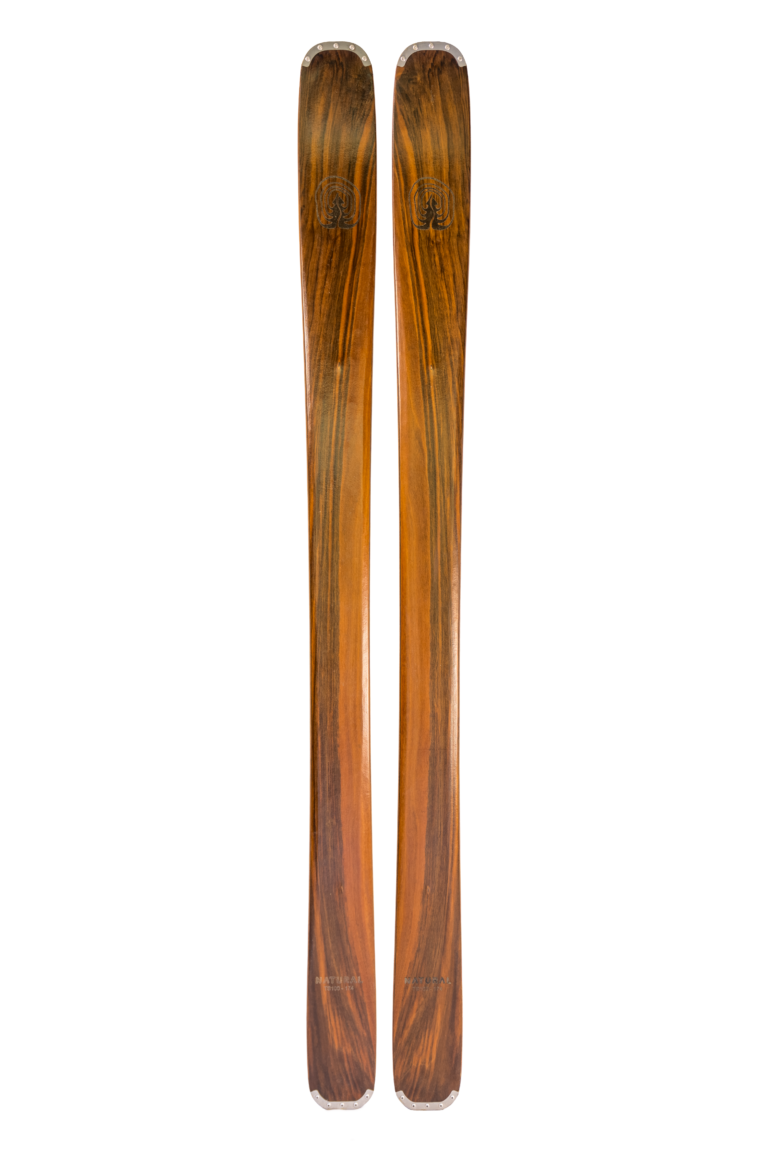


Symbiotic 107
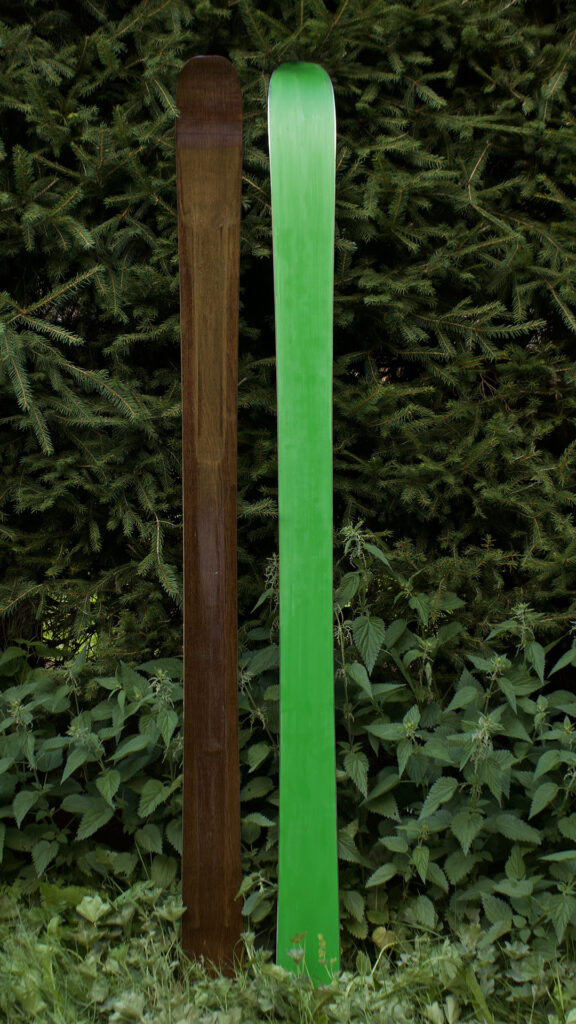
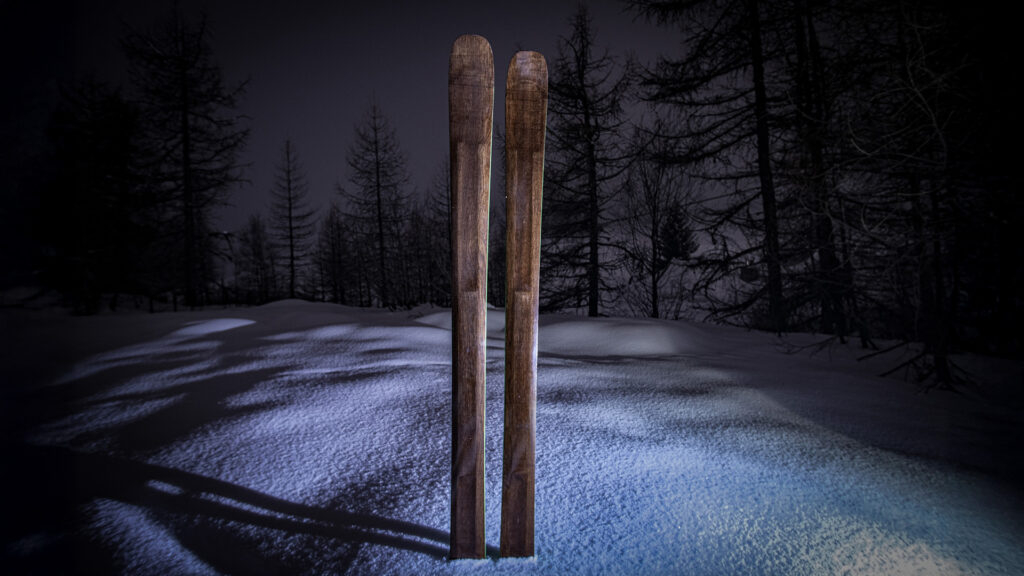
Shape
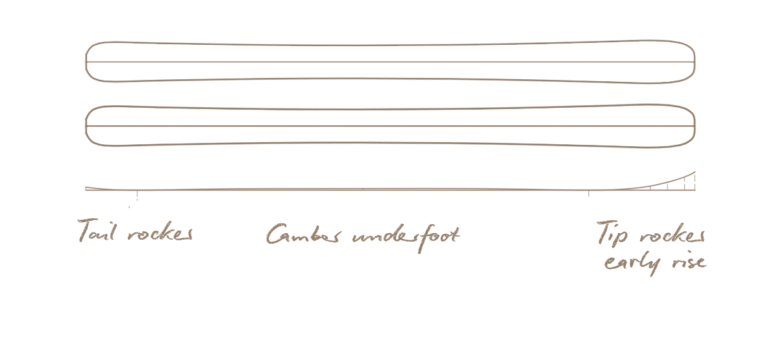
Specifications
Length: 1660 mm
Tip: 132mm
Underfoot: 107mm
Tail: 121mm
Radius: 17m
Weight; 1550grams
Length: 1760 mm
Tip: 132mm
Underfoot: 107mm
Tail: 121mm
Radius: 18m
Weight; 1620 grams
Length: 1860 mm
Tip: 132mm
Underfoot: 107mm
Tail: 121mm
Radius: 19m
Weight; 1690 grams
Construction
Paulownia core (Spain)
The paulownia core is the same lightweight foundation used across the Symbiotic range, but here it’s tuned for a wider platform that’s going to get skied harder and faster. The aim isn’t just to keep weight down for the climb — it’s to make sure that weight saving doesn’t come at the cost of the power you need to actually drive a 107mm ski through a committed line.
Strandwoven bamboo sidewalls
Torsional stiffness from the strand-woven bamboo sidewalls matters more as a ski gets wider, simply because there’s more leverage acting on the edge. At 107mm, on a ski built to be skied at speed, that extra contribution is what keeps the edge biting rather than skipping when you commit to a turn on firm spring snow.
Flax / carbon (Bcomp, Switzerland)
The flax and carbon fibres in this layup are oriented to maximise torsional control and edge hold specifically — the direction the fibres run matters as much as the materials themselves. The result is a ski that stays composed at speed, holding its line rather than getting deflected, which is exactly what you want when the terrain gets serious and the cost of a chattering edge goes up.
Cork tip & tail
Cork at the tip and tail absorbs vibration and keeps swing weight down, and on a wider, faster ski like this one that translates directly into how clean the initiation feels and how much chatter you get on steep, committing terrain — the difference between a ski that feels settled and one that feels busy underfoot.
Stainless steel tip & tail guards
Mechanically fixed stainless steel guards prevent delamination at the tip and tail, the most common failure point in any ski. A ski built to be skied this hard, in terrain this serious, needs to survive being skied that way — this is the detail that makes sure it does.
Wood veneer topsheet
The topsheet is a premium hardwood veneer, unique to every pair — a ski that looks as serious as it skis, and ages into something better looking every season.
Entropy Bioresin
The whole structure is bonded with a plant-based bioresin rather than a standard petroleum-derived epoxy — the same job as conventional epoxy, done with a smaller footprint.
Care
A ski built to be skied hard benefits from being looked after properly, and none of it takes long. Wax the base regularly — it’s the easiest way to keep the ski gliding the way it should. Keep the edges deburred so they hold cleanly on icy snow, but don’t sand or grind the base down every time you tune; that takes off more of the base than you need to and shortens its life for no real benefit.
The topsheet is real wood, and it lives and breathes with its environment — keep the skis somewhere cool and dry between trips rather than against a radiator or in a hot car, dry them off after wet days, and give the topsheet an occasional coat of our wax to keep it protected, the same way you’d look after a good leather boot.
Once a season, or after any base repair, get the skis to a shop with a diamond stone for a full restructure. The pattern cut into the ptex isn’t decorative — it helps break the surface tension of the water film under the ski, which is what lets it glide rather than drag, especially in the wetter, warmer snow that spring touring on a ski like this tends to involve. Look after it properly and a Symbiotic 107 will keep rewarding committed skiing for years.
€1,680.00
you may also like
KODAMA 98
Symbiotic 91