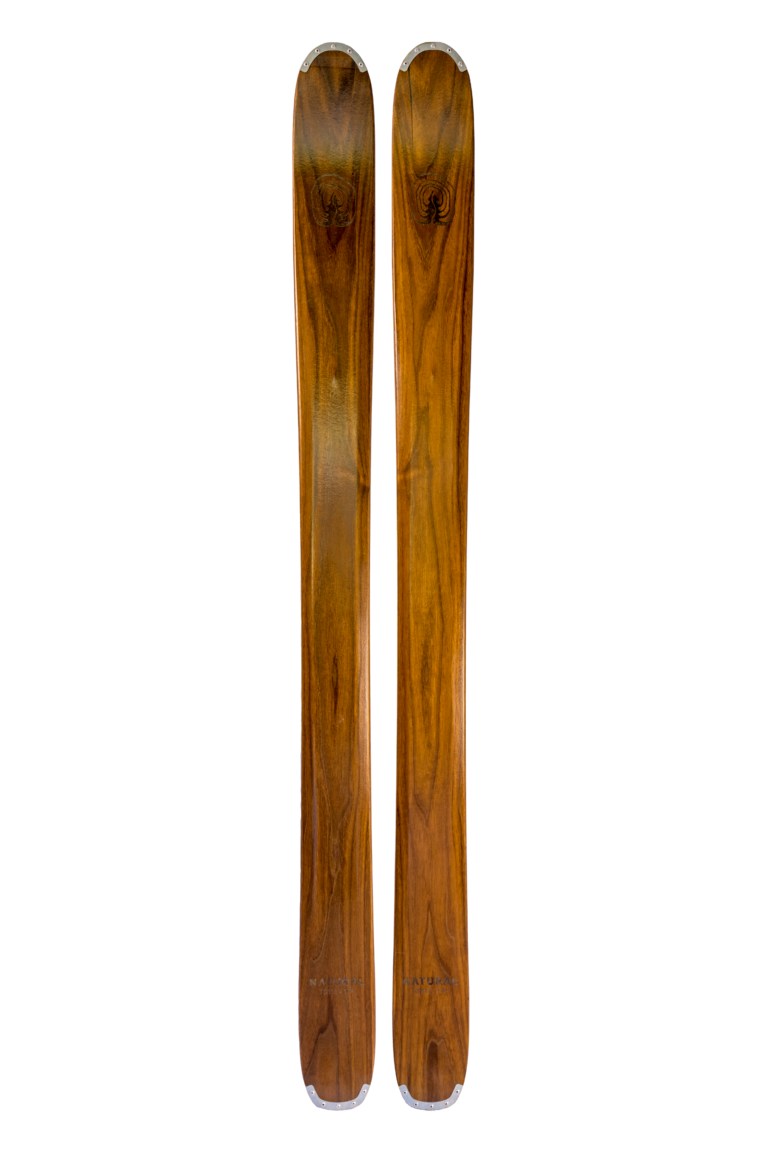


Symbiotic 91
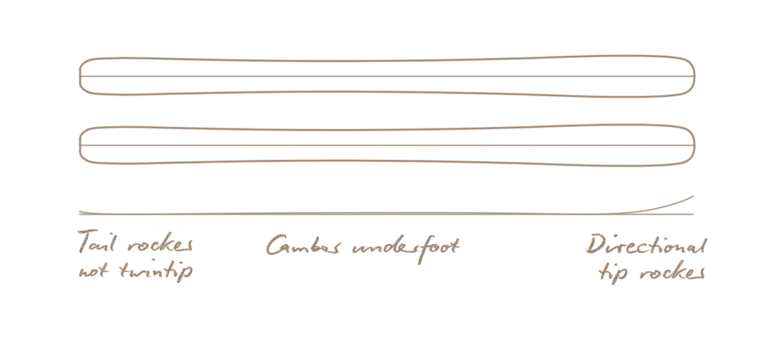
Shape
Specifications
Lengths: 1620mm
Tip: 120mm
Underfoot: 91mm
Tail: 105mm
Radius: 16m
Weight; 1250grams
Lengths: 1700mm
Tip: 120mm
Underfoot: 91mm
Tail: 105mm
Radius: 17m
Weight; 1320 grams
Lengths: 1780mm
Tip: 120mm
Underfoot: 91mm
Tail: 105mm
Radius: 17m
Weight; 1390 grams
Construction
Paulownia core (Spain)
Paulownia is one of the lightest structural hardwoods there is — roughly a third the density of the bamboo we use in the freeride line, at around 270–310 kg per cubic metre, while still behaving like a proper wood under load rather than a foam. Ours is grown on cultivated plantations in Spain. The benefit is straightforward: weight that disappears on the way up, on a ski that still responds properly the moment you point it downhill.
Strandwoven bamboo sidewalls
We use the same strand-woven bamboo sidewalls as the freeride line — one of the hardest natural materials around, formed by compressing and bonding bamboo fibre under huge pressure. On a touring ski, this is what stops the build from becoming a pure weight-saving exercise: it gives the edge pop and bite, so a ski built primarily for the uphill still feels properly alive when you’re skiing it hard on the way down.
Flax(Bcomp) / carbon
Flax and carbon both feature here, but in a different ratio to the freeride skis. Weight is the priority on a touring ski, so we keep the carbon content lower and let the flax do more of the work damping vibration. The result is a descent that feels smooth rather than harsh — less of the stiffness you’d get from a carbon-heavy layup, more give.
Cork tip & tail
Cork tip and tail sections do the same job here as elsewhere in the range — they’re mostly trapped air, so they’re light and good at soaking up vibration. On a ski you might be on for hours at the end of a long day, that reduction in swing weight and chatter adds up: turns stay clean even when your legs are tired.
Stainless steel tip & tail guards
Tip and tail guards are mechanically fixed stainless steel, the same as the rest of the range. On a touring ski this matters more than most — you’re often a long way from help, and equipment failure somewhere remote has real consequences. This is built to handle whatever terrain you find yourself in.
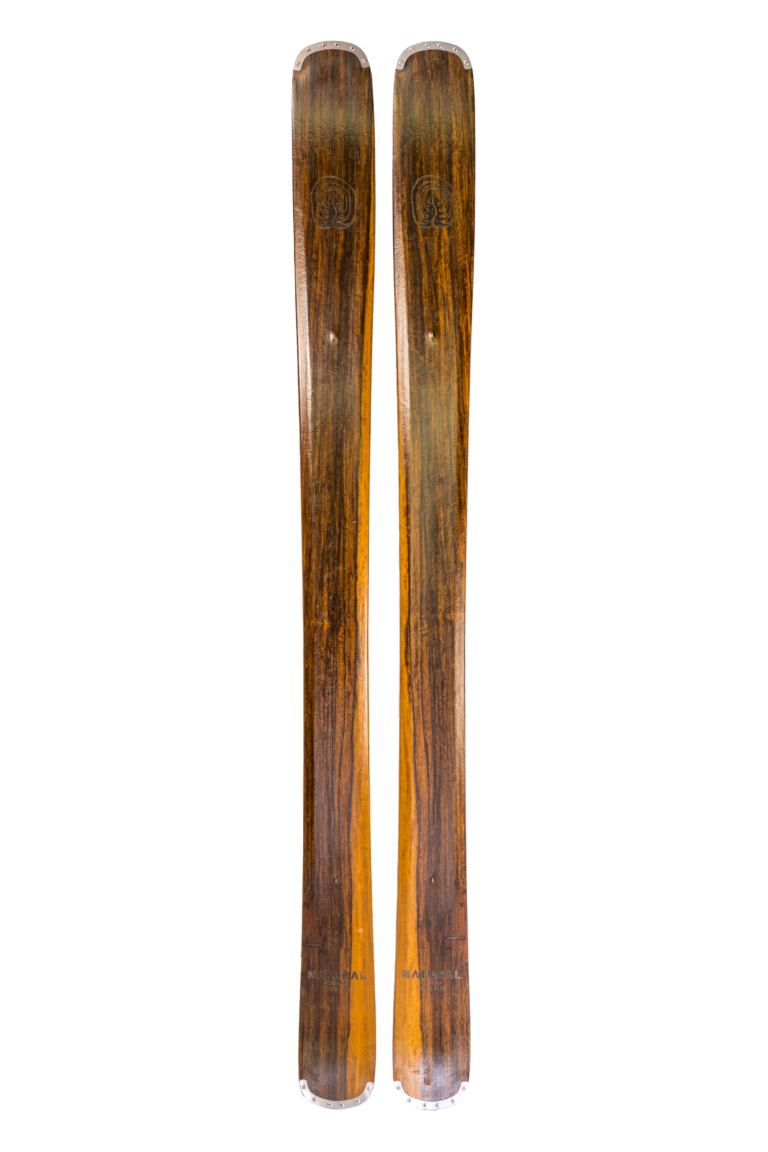
Wood veneer topsheet
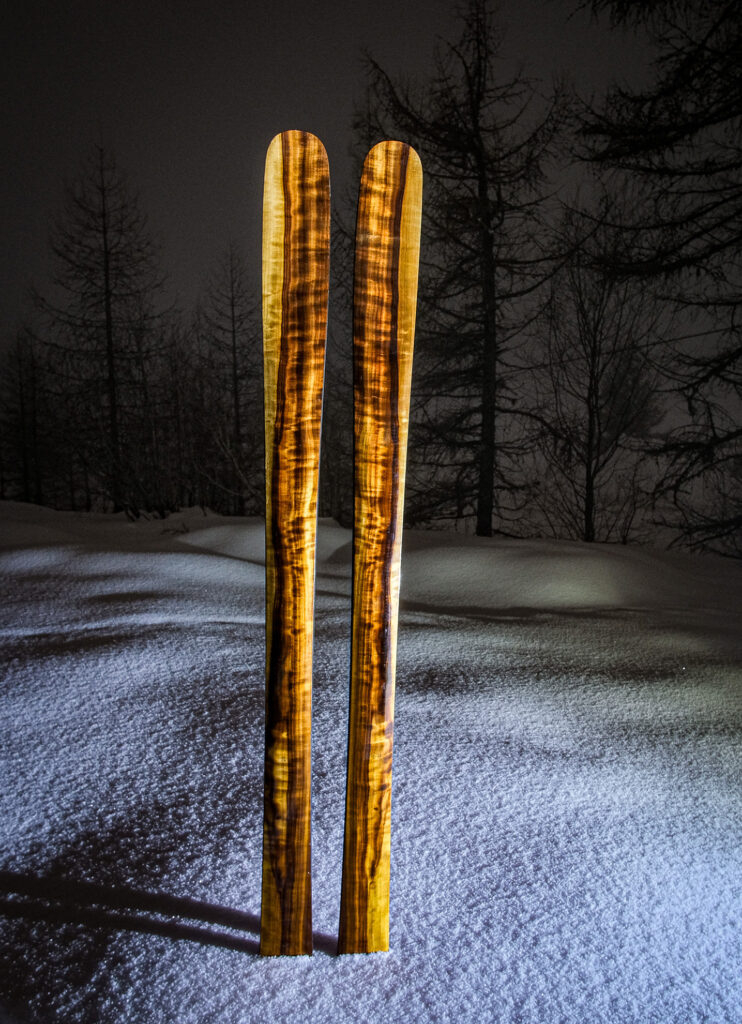
The topsheet is a real hardwood veneer, individually finished, so every pair is genuinely one of a kind. Worth a glance on the way up the mountain, too — not just on the way down.
Entropy Bioresin
As with the rest of the range, the structural resin throughout is plant-based rather than petroleum-derived — the same job as standard epoxy, with a far lower environmental footprint.
Care
A few minutes of care after each trip keeps a Symbiotic skiing the way it should for years. The base needs waxing regularly, since this is the single most effective thing you can do to keep the ski running well in whatever snow you find. Keep the edges deburred so they don’t catch, but resist the urge to sand or grind them every time — that removes more material than you need to and shortens the life of the base.
The topsheet is real wood, and like any wood it’s alive — it takes in and gives off moisture depending on its environment, so where and how you store the skis matters. Keep them somewhere cool and dry rather than propped against a radiator or left in direct sun, and dry them off after a wet day out. Every so often, give the topsheet a coat of our wax too — treat it the way you’d treat a good leather boot or an oiled work surface, and it’ll keep its finish and its character for years.
Once a season, or when the base has needed repair, get the skis to a shop with a diamond stone for a proper restructure. It’s not just about how the base looks — the structure cut into the ptex helps break the surface tension of the meltwater layer under the ski, which is what lets it glide rather than stick, especially in wet or warm snow. Look after the base this way and the rest of the ski will look after itself.
€1,680.00
you may also like
KODAMA 98
KODAMA 108