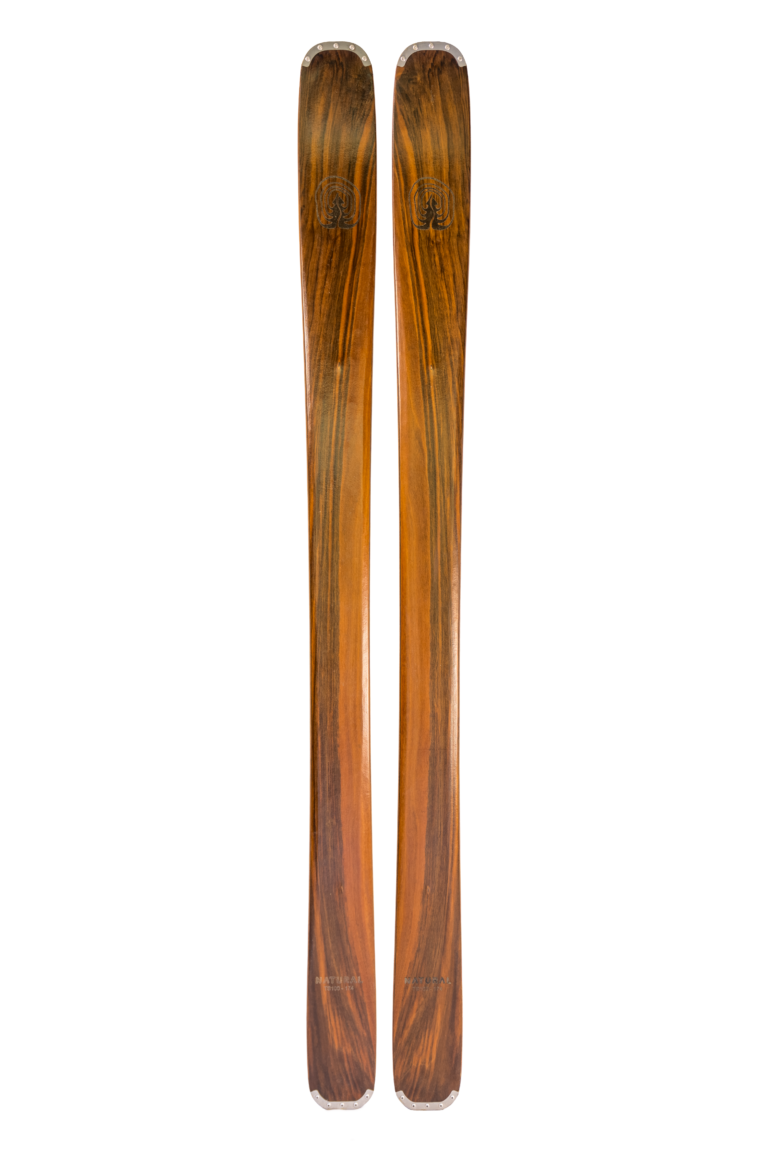


KODAMA 117
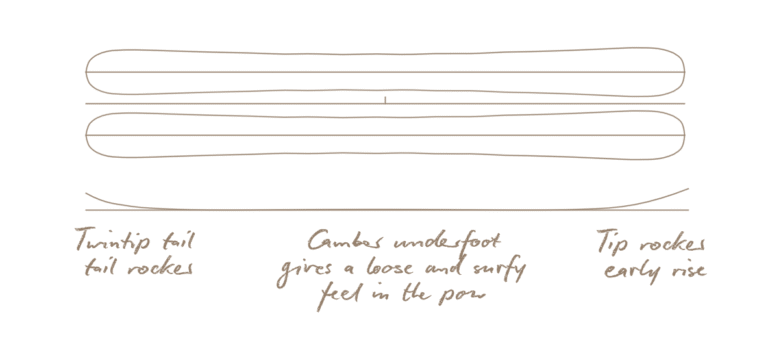
Shape
Specifications
Kodama 117 — 166 cm
Waist: 117 mm
Weight: ~2,050 g per ski
Best for: Lighter riders or skiers looking for a playful, maneuverable feel in tight terrain and deep snow.
Kodama 117 — 176 cm
Waist: 117 mm
Weight: ~2,150 g per ski
Best for: The reference length, offering the ideal balance of float, control, and versatility for powder-focused freeriding.
Kodama 117 — 186 cm
Waist: 117 mm
Weight: ~2,250 g per ski
Best for: Powerful skiers seeking maximum float, stability, and confidence in deep snow and big mountain conditions.
Construction
Bamboo core
Bamboo grows in long, hollow-walled fibres that store and return energy efficiently — it’s part of how the plant bends in the wind without snapping. At 117mm we run a full bamboo core, and that energy return matters even more here: it’s what keeps a wide ski feeling lively and decisive rather than just floating dead on top of the snow. Load it into a turn in deep snow and it gives that energy back, so you stay in control of the line rather than just along for the ride.
Strandwoven bamboo sidewalls
Strand-woven bamboo is compressed and bonded under huge pressure, making it one of the hardest natural materials you can build with — harder than most hardwoods on the Janka scale, the standard test for how much force it takes to dent timber. At the widest point in the Kodama line, that density keeps the edge holding its own even when it’s doing less work in deep snow, so when you do need to set an edge — dropping into a couloir, crossing a wind-affected slope — it’s there.
Flax / carbon (Bcomp, Switzerland)
Flax fibre is naturally good at damping vibration — its structure absorbs and dissipates energy around three times more effectively than fibreglass. Carbon is exceptional at resisting twist for very little weight, and at 117mm we run more of it, because a wider ski needs more help staying composed at speed. The result is a ski that stays smooth through chopped-up or wind-affected snow while holding its line when big mountain terrain starts moving fast underneath you.
Cork tip & tail
Cork is mostly trapped air — around 85–90% by volume — which makes it both an excellent shock absorber and very light. On a longer, wider platform like the 117, that weight saving and vibration control at the tip and tail matters even more: it keeps swing weight down and turn initiation clean, so long descents take less effort and the ski stays calm rather than fighting you.
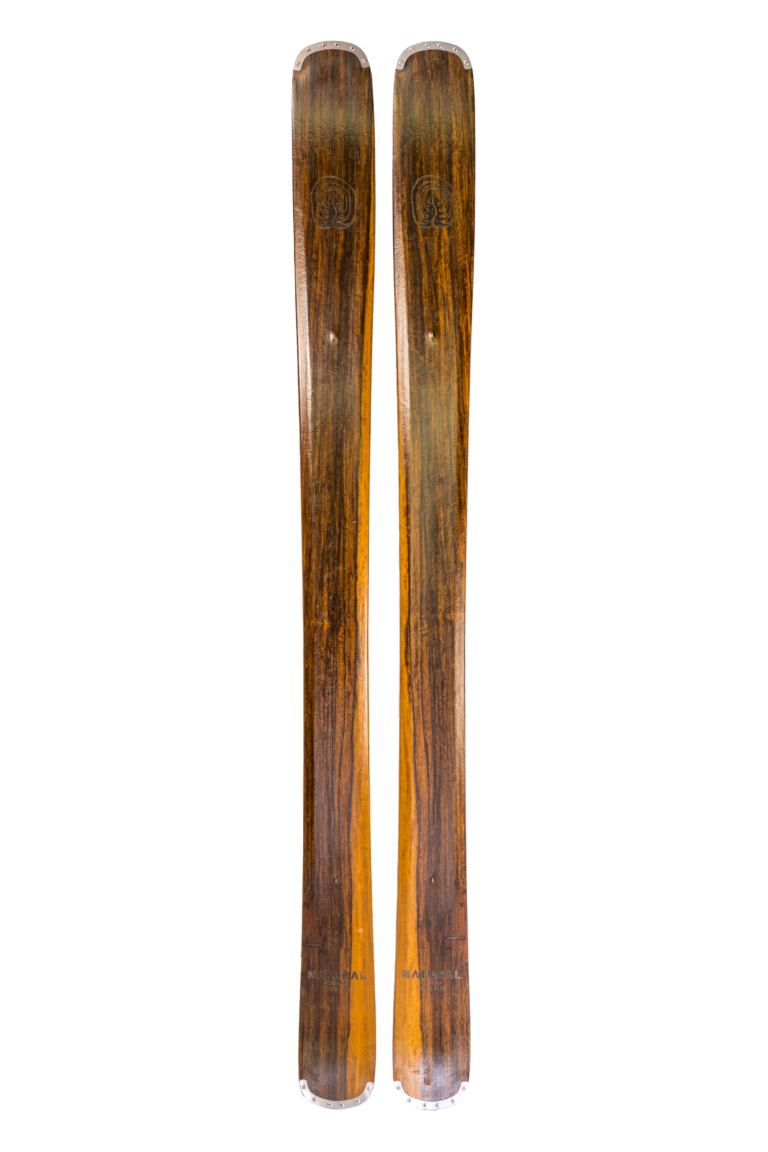
Stainless steel tip & tail guards
The most common way skis fail is delamination — the layers separating at the tip or tail, where impacts hit hardest. We fit a full stainless steel guard, mechanically fixed through the structure rather than just glued on, so there’s no seam for water or impact to work into. For a ski built for backcountry and touring use, where hidden rocks and buried terrain features are part of the deal, that durability is the whole point.
Wood veneer topsheet
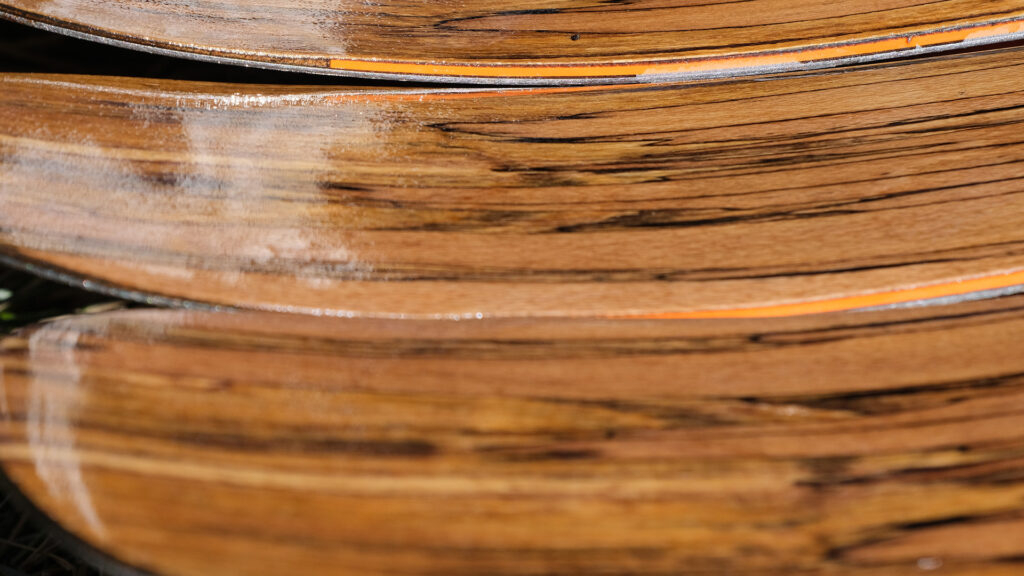
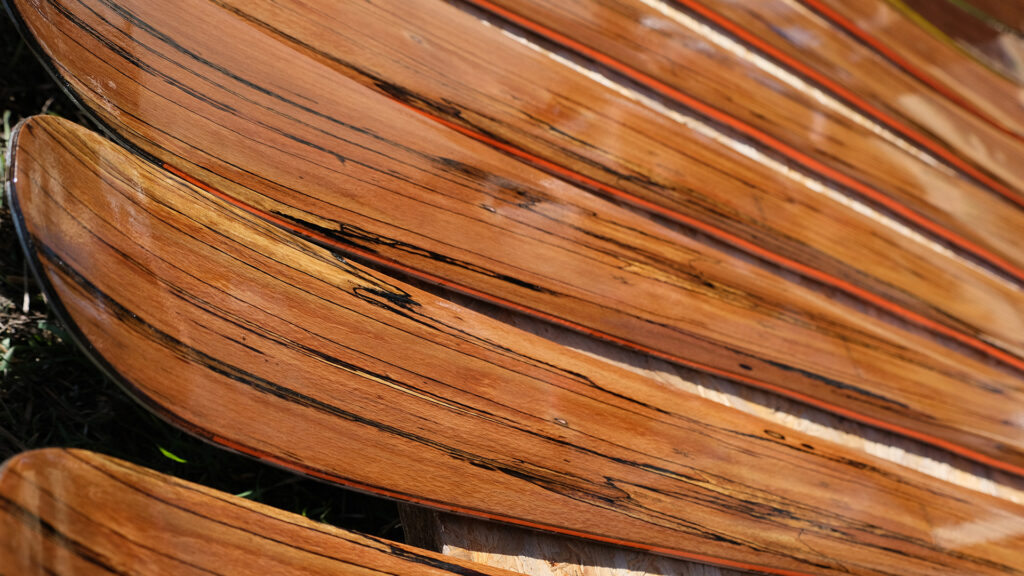
Every topsheet is a real hardwood veneer, individually selected and finished, so the grain on your pair is unique to it. Wood ages well — it’s the same reason vintage furniture and instruments look better with time rather than worse — and on a powder day, it’s the ski that turns heads on the chairlift.
Entropy Bioresin
The resin holding the whole structure together is plant-based rather than petroleum-based, doing the same structural job as standard epoxy with a far lower environmental footprint.
Care
Your Kodama 117 is built with real wood, and wood is alive — it absorbs and releases moisture and responds to its environment over time. Looking after the topsheet is simple: keep it dry after use, store the skis somewhere cool and dry rather than against a radiator or in direct sun, and give the topsheet a coat of our wax every so often to keep the wood fed and the finish protected. Think of it the same way you’d treat an oiled wooden worktop or a good leather boot — a little regular care keeps it looking and performing like new.
The base needs regular waxing too — it’s quick, and it’s the single biggest thing you can do to keep the ski performing and protect the core underneath. Keep the edges deburred so they don’t catch or chatter, but avoid sanding or grinding them every time you tune; that takes off more material than necessary and wears down the base structure faster than it needs to.
Once a season, or after any base repair, take your skis to a shop with a diamond stone to restructure the base. A well-structured base isn’t just cosmetic — the pattern cut into the ptex helps break the surface tension of the water layer under your skis, so they glide better and hold less suction, especially in wetter or warmer snow. Look after the base this way and it’ll keep performing for years.
€1,680.00
you may also like
KODAMA 108
Symbiotic 91