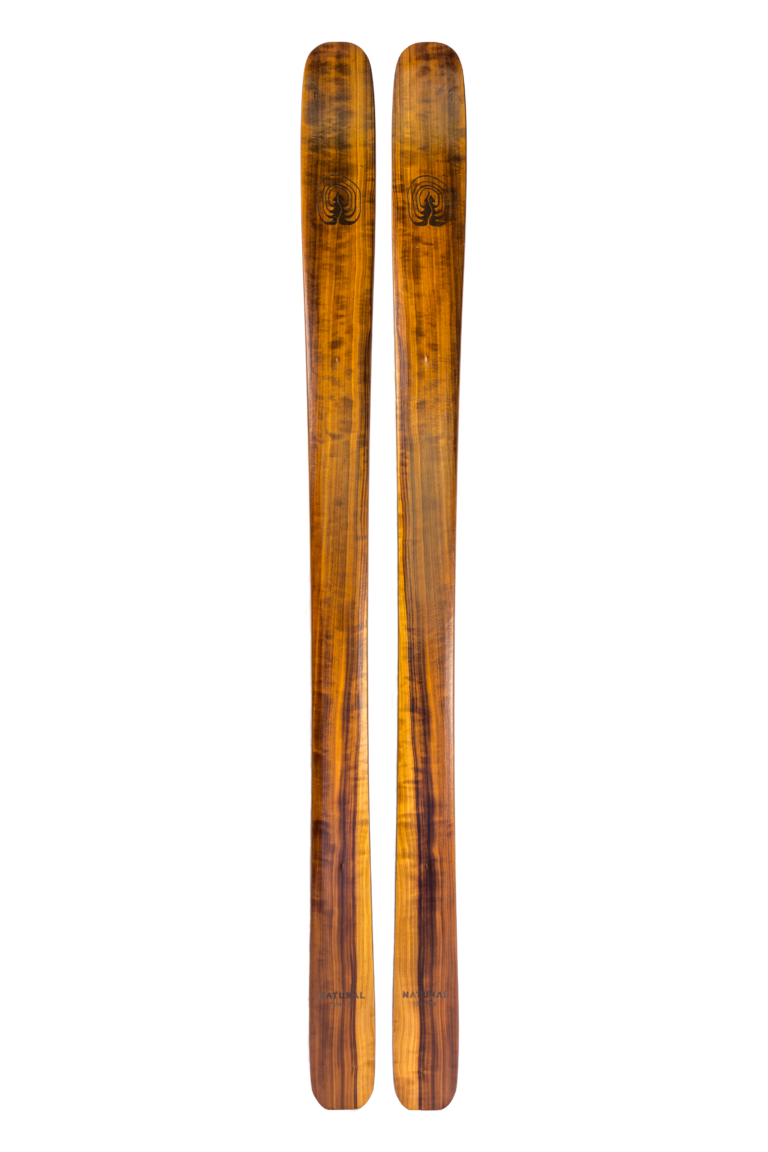


KODAMA 108
Shape
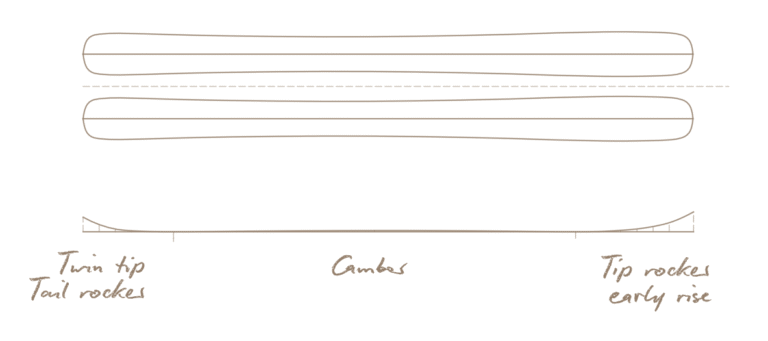
Specifications
Kodama108 — 166 cm
Waist: 108 mm
Weight: ~2,100 g per ski
Best for: Lighter riders or skiers looking for a playful, agile, and highly maneuverable feel.
Kodama108 — 176 cm
Waist: 108 mm
Weight: ~2,200 g per ski
Best for: The reference length, offering the ideal balance of stability, versatility, and all-mountain freeride performance.
Kodama108 — 186 cm
Waist: 108 mm
Weight: ~2,300 g per ski
Best for: Powerful skiers seeking maximum stability, support, and confidence at higher speeds.
Construction
Bamboo core
Bamboo grows in long, hollow-walled fibres that store and return energy efficiently — it’s part of how the plant bends in the wind without snapping. We build the core by layering bamboo strips so the ski flexes evenly and holds its character across temperatures, from minus 15 to plus 15. The payoff is rebound: load the ski into a turn and it gives that energy straight back, so it feels like it’s working with you rather than just being pushed around.
Strandwoven bamboo sidewalls
Strand-woven bamboo is compressed and bonded under huge pressure, which makes it one of the hardest natural materials you can build with — harder than most hardwoods on the Janka scale, the standard test for how much force it takes to dent timber. That density does two things: it adds energy transfer between turns, and it gives the edge of the ski a direct, precise feel, because there’s less material flexing and soaking up your input before it reaches the snow.
Flax / carbon (Bcomp, Switzerland)
Flax fibre is naturally good at damping vibration — its structure absorbs and dissipates energy around three times more effectively than fibreglass, which is why it turns up in everything from bike frames to boat hulls. Carbon, on the other hand, is exceptional at resisting twist for very little weight. Put the two together and the ski stays smooth over chopped-up snow while staying precise and locked-in on hard terrain — usually a trade-off, but here the materials cover each other’s weaknesses.
Cork tip & tail
Cork is mostly trapped air — around 85–90% by volume — which makes it both an excellent shock absorber and very light. Placing it at the tip and tail, the parts of the ski moving fastest and furthest from your feet, cuts vibration exactly where it’s most disruptive and reduces swing weight, so the ski starts and finishes turns more cleanly with less chatter.
Stainless steel tip & tail guards
The most common way skis fail is delamination — the layers separating at the tip or tail, where impacts hit hardest. We fit a full stainless steel guard, mechanically fixed through the structure rather than just glued on, so there’s no seam for water or impact to work into. It’s a simple fix for the most common failure point in ski construction.
Wood veneer topsheet
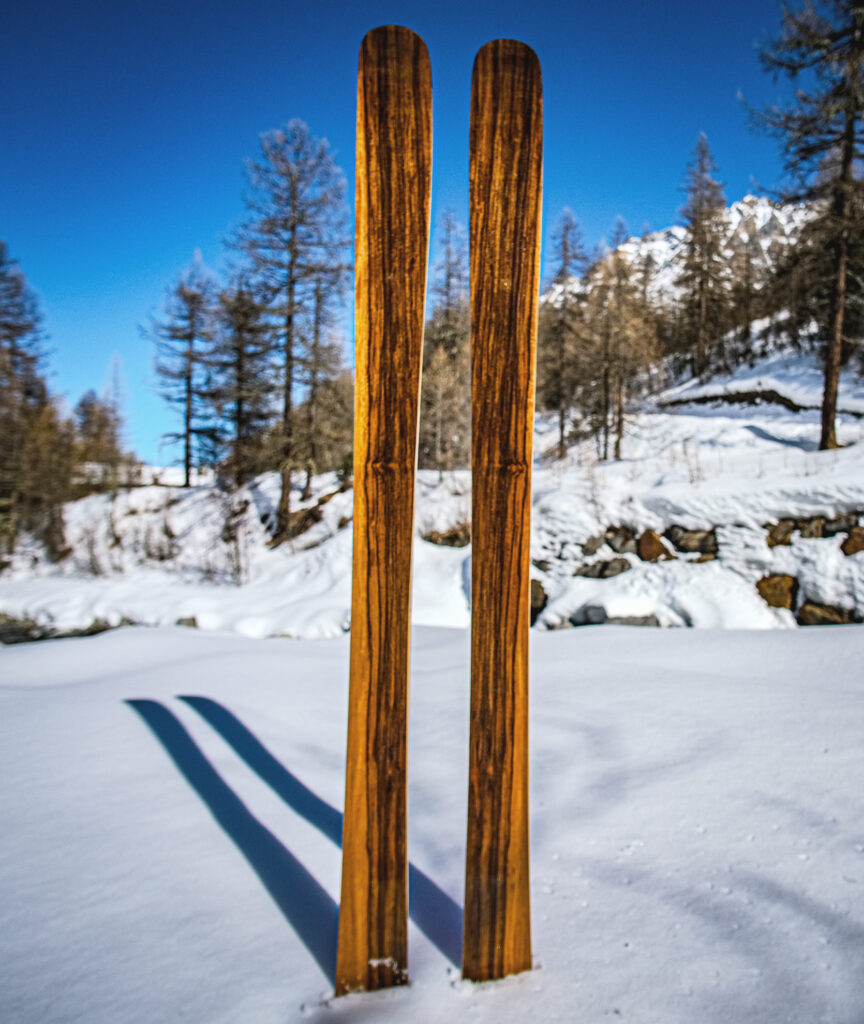
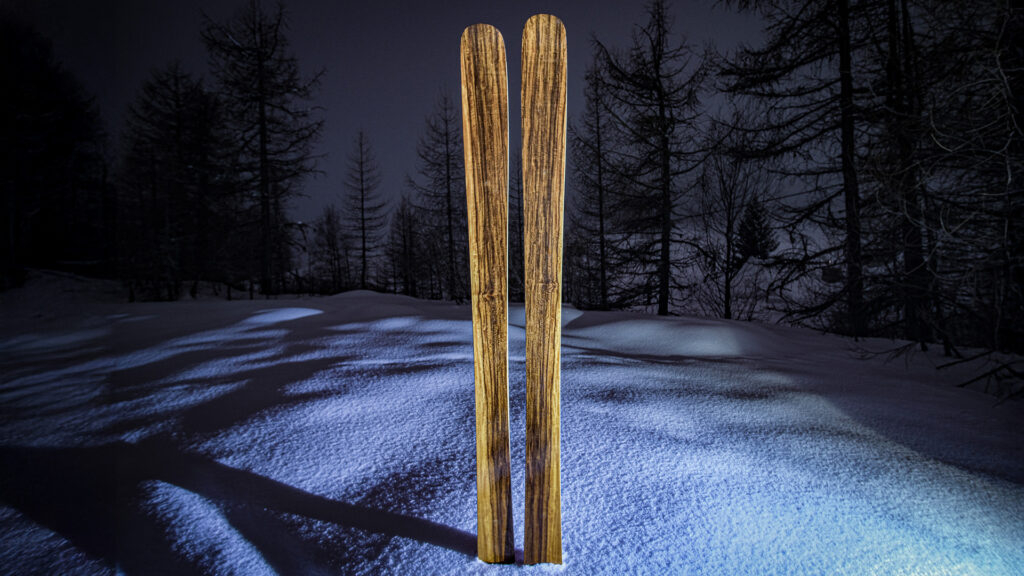
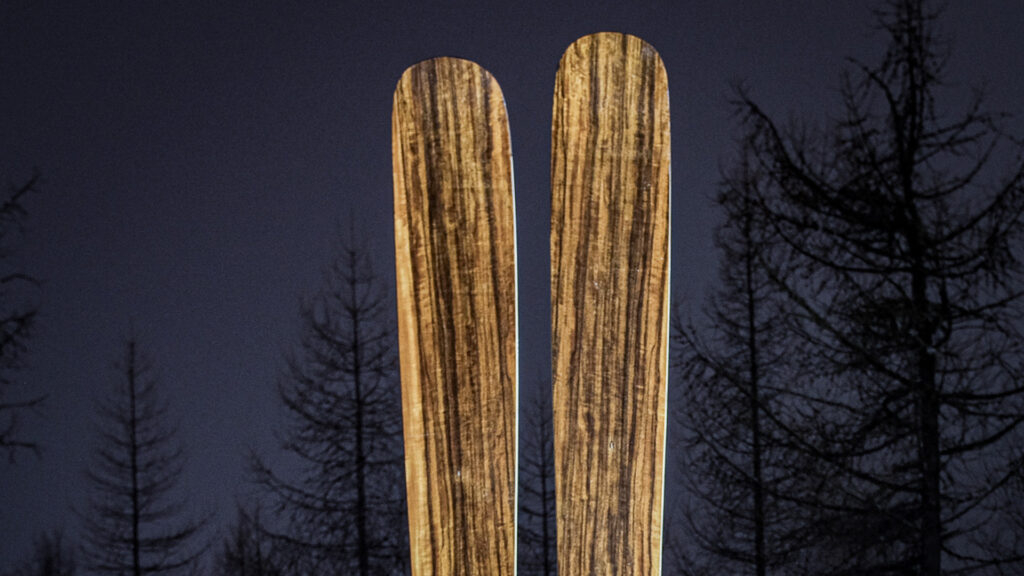
Every topsheet is a real hardwood veneer, individually selected and finished, so the grain on your pair is unique to it. Wood ages well — it’s the same reason vintage furniture and instruments look better with time rather than worse — and the same is true here.
Entropy Bioresin
The resin holding the whole structure together is plant-based rather than petroleum-based, doing the same structural job as standard epoxy with a far lower environmental footprint.
Care
Your Kodama 108 is built with real wood, and wood is alive — it absorbs and releases moisture and responds to its environment over time. Looking after the topsheet is simple: keep it dry after use, store the skis somewhere cool and dry rather than against a radiator or in direct sun, and give the topsheet a coat of our wax every so often to keep the wood fed and the finish protected. Think of it the same way you’d treat an oiled wooden worktop or a good leather boot — a little regular care keeps it looking and performing like new.
The base needs regular waxing too — it’s quick, and it’s the single biggest thing you can do to keep the ski performing. Keep the edges deburred so they don’t catch or chatter, but avoid sanding or grinding them every time you tune; that takes off more material than necessary and wears down the base structure faster than it needs to.
Once a season, or after base repairs, take your skis to a shop with a diamond stone to restructure the base. A well-structured base isn’t just cosmetic — the pattern cut into the ptex helps break the surface tension of the water layer under your skis, so they glide better and hold less suction, especially in wetter or warmer snow. Look after the base this way and it’ll keep performing for years.
€1,680.00
you may also like
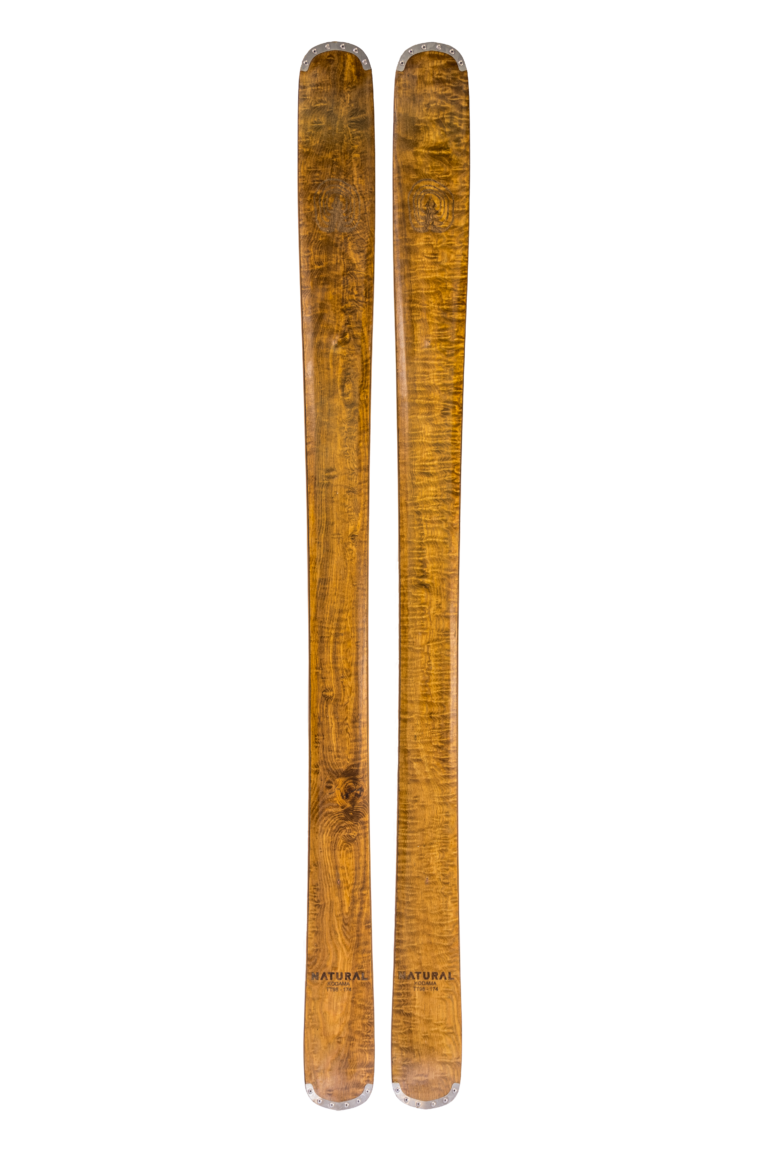
KODAMA 98
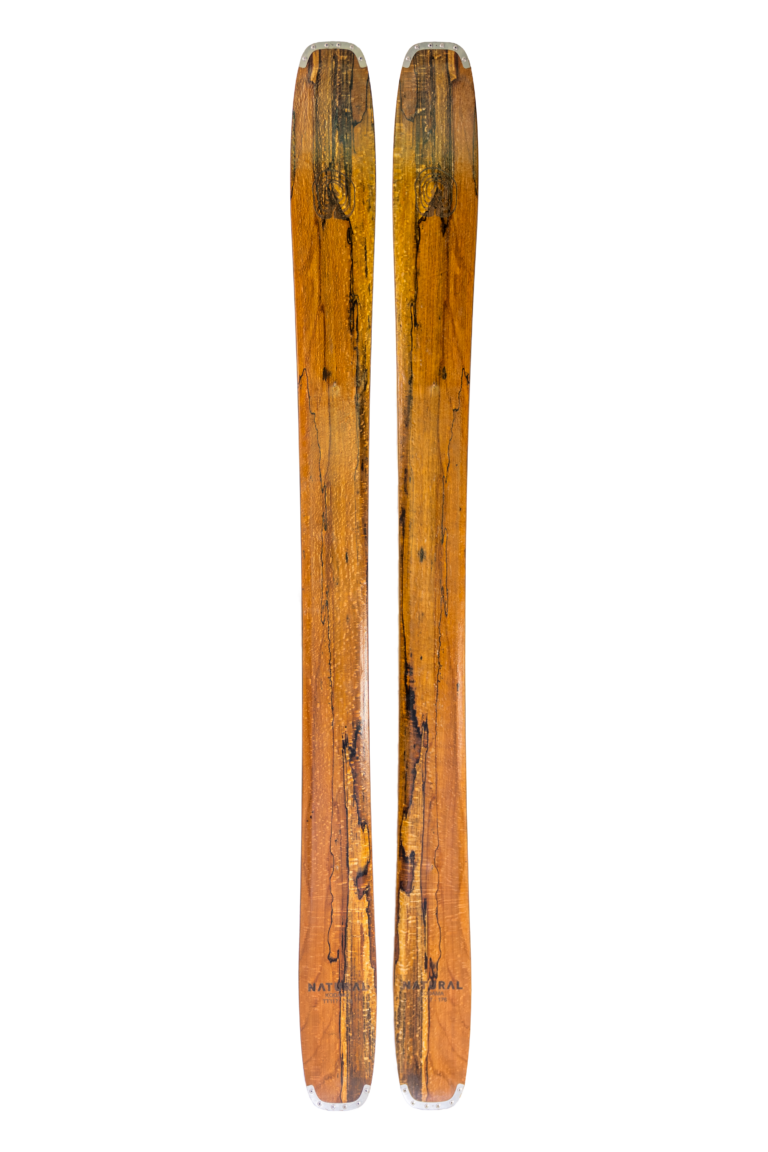
KODAMA 117